Preclinical WebsiteClinical Website

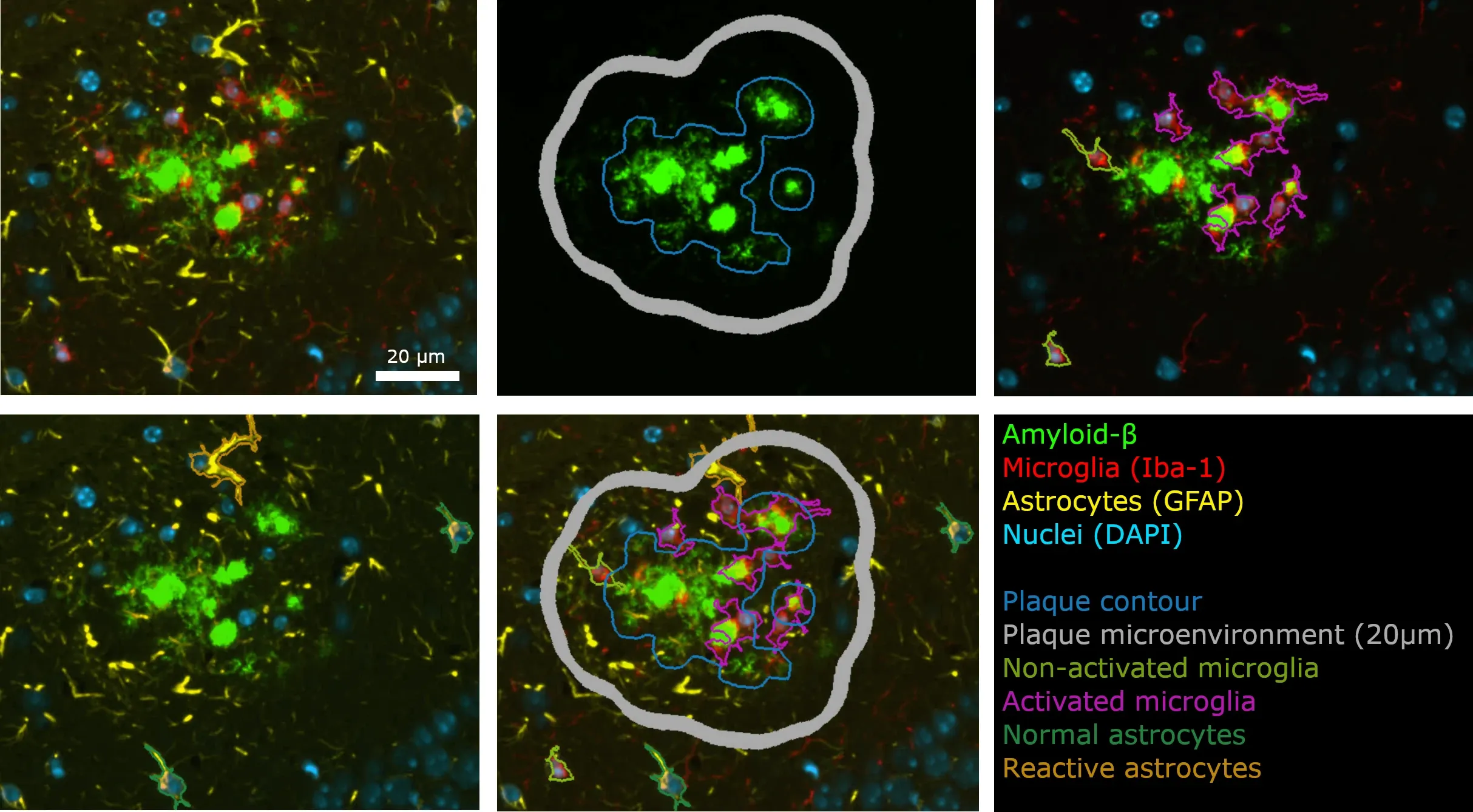
Biospective has industry-leading expertise in providing beta amyloid plaques histology services, including multiplex immunofluorescence (mIF) staining using a variety of antibodies. We have unique capabilities for measurements of plaque features (e.g. count, size, area, type, morphometry) and spatial analysis of the complex relationships with associated neuroinflammation, including activated microglia and reactive astrocytes using our proprietary "microenvironment analysis".

What Contract Research Services does Biospective offer for Amyloid Plaque Staining & Analysis?

High-resolution Aβ plaque detection, spatial mapping, and neuroinflammation profiling for Alzheimer’s disease research. 

Biospective provides end-to-end characterization of amyloid-beta (Aβ) plaques and the glial microenvironment responses using advanced multiplex immunofluorescence (mIF) tissue staining, high-resolution whole-slide imaging, and automated machine-learning based morphology analysis.
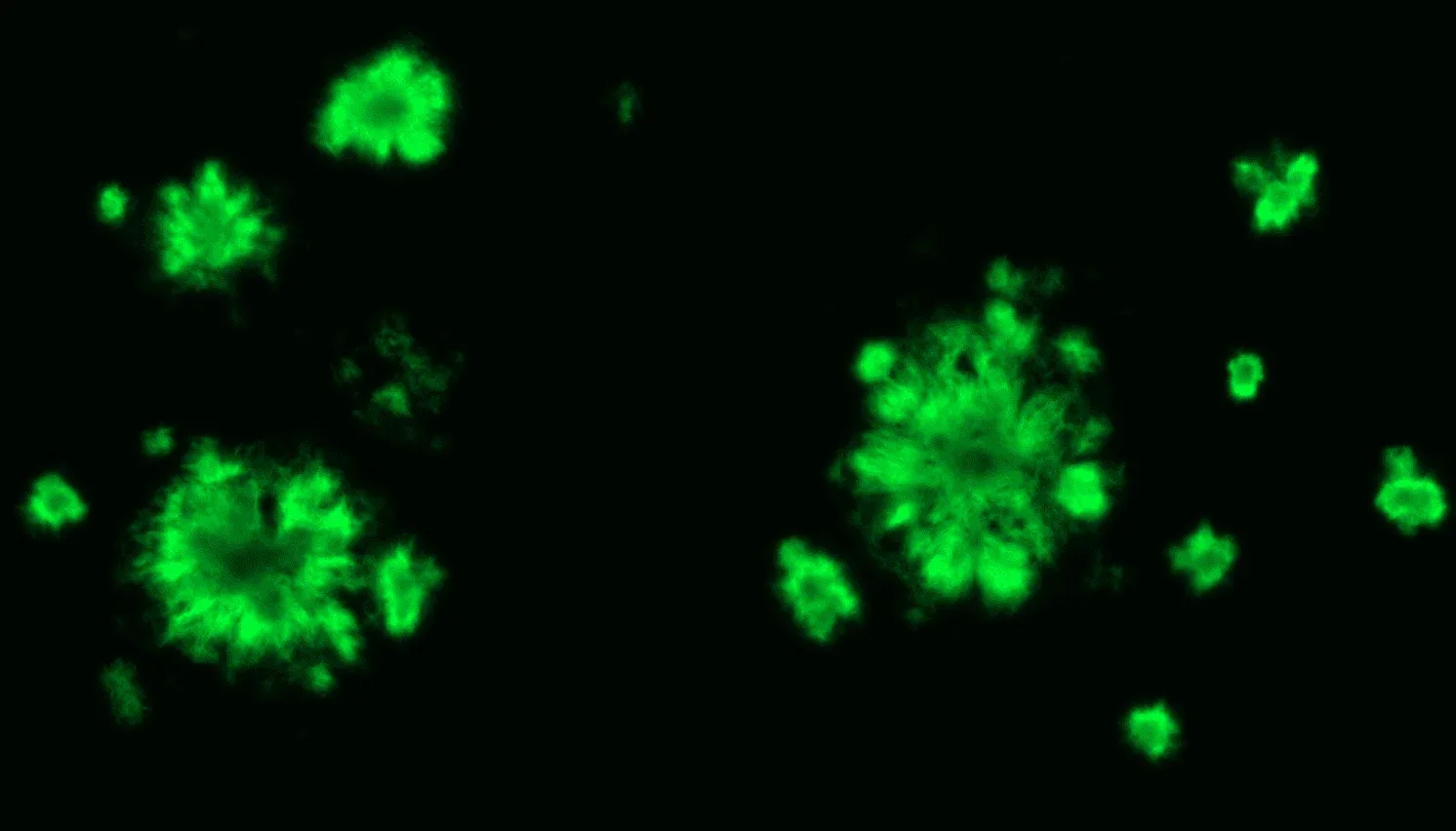
Image of PFTAA Amyloid Plaques

Fluorescent pFTAA staining of amyloid plaques in the cerebral cortex of APP/PS1 mice.

Our platform enables quantitative, multiparametric analysis of amyloid-beta pathology alongside microglial and astrocytic phenotypes, integrating spatially-resolved biological metrics to deliver sensitive and comprehensive assessments of therapeutic efficacy beyond conventional plaque load measurements. 

Our Amyloid Plaque Staining & Image Analysis Capabilities

Amyloid Plaque Detection & Quantification 

  • Fibrillar amyloid detection using optimized fibrillar Amyloid OC antibody (optional pan-Aβ / Aβ40 / Aβ42 / Aβ43, 4G8, 6E10, pFTAA dye quantification).
  • Plaque metrics: count, area, size distribution, and morphology metrics (e.g. circularity).

Advanced Plaque Microenvironment Profiling 

  • Quantification of density of relevant markers, such as microglia/Iba1 and astrocytes/GFAP, both globally and in the plaque microenvironment as a function of the distance to the plaque.
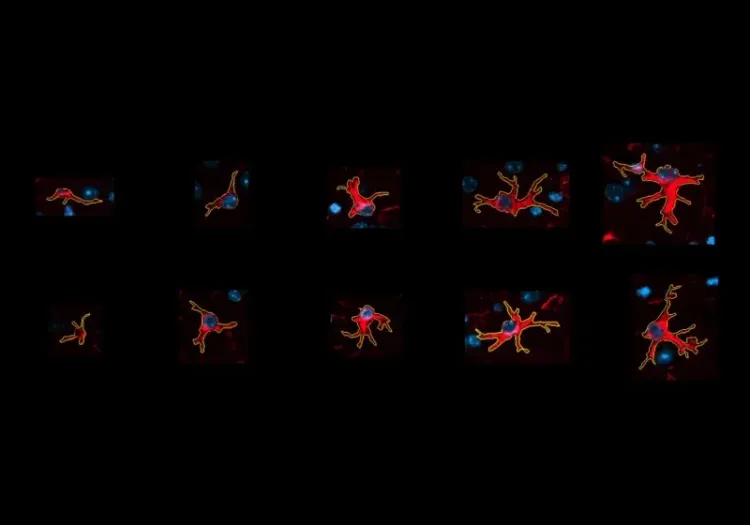
  • Detection and morphological classification of microglia and astrocytes. Counts of glial cells of specific morphology can be measured both globally and locally at different distances from individual amyloid plaques.
  • Microglia–astrocyte interaction metrics, such as the ratio of microglia to astrocyte in the plaque environment.

Whole-Slide Imaging & Spatial Analytics 

  • Whole-slide, high-resolution, multi-channel fluorescence imaging. 
  • Automated neuroanatomical brain segmentation — all metrics are calculated in each brain region-of-interest (ROI), such as the hippocampus, amygdala, entorhinal cortex, etc. 

Translational Integration 

amyloid plaque montage

Example montage of an Aβ plaque from brain tissue sections from an APP/PS1 transgenic mouse that have undergone automated staining and image analysis using the processes developed by Biospective.

Tissue Types & Disease Models

Species

  • Transgenic rodent models, including APP/PS1, 5xFAD, Tg2576, APP KI models

Tissue Formats

  • FFPE sections: high-throughput, stable
  • Fixed-frozen sections: ideal for hard-to-detect inflammatory markers 

Applications

  • Therapeutic efficacy studies
  • Mechanistic modeling of plaque-associated neuroinflammation 

What is Biospective's Workflow for Staining & Quantitative Analysis of Amyloid-Beta Plaques?

Well-established protocols for brain sample preparation, staining, slide scanning, and quantitative image analysis.

Our Process for Aβ Plaque Staining & Analysis

At Biospective, we have implemented a standardized, highly reproducible multi-step process for staining and analysis of amyloid-beta plaques from formalin-fixed brains:


  1. Sample Preparation
    •  High-precision microtomy or cryosectioning of FFPE or fixed-frozen brains.
    • Custom antigen retrieval protocols optimized for OC and each Aβ isoform–specific antibody, ensuring high-affinity binding and preservation of plaque morphology. Retrieval conditions are further customized for any additional antibodies included in the multiplex panel. We routinely perform formic acid retrieval, heat-induced retrieval (HIER), enzymatic retrieval, or a combination of these methods.
    • Stringent quality control (QC) of staining quality and specificity as well as tissue integrity.

  2. Staining (IHC or Multiplex IF)
    • Amyloid Markers
      • OC fibrillar amyloid (primary default marker)
      • Pan- Aβ, Aβ 1–40, 1–42, 1–43, 6E10, 4G8, and MAOB-2 (or custom amyloid antibody)
      • pFTAA dye
    • Microenvironment Markers
      • Iba1 (microglia)
      • GFAP (astrocytes)
      • TREM2, LAMP1, CD68, NeuN, APP, and/or custom markers
      • DAPI (nuclei)
    • Advantages of Multiplexing
      • Multiplexing enables cell-type–specific analysis of the microenvironment on a single slide, accurately characterizing the cellular landscape surrounding individual plaques.

  3. Imaging
    • Whole-section multichannel fluorescence scanning

  4. Quantitative Analysis
    We have developed fully-automated quantitative analysis for multiplex immunofluorescence, including amyloid-beta plaque segmentation and counting, glial cell morphology analysis, and microenvironment analysis.

Illustration of Biospective's process of collecting brain tissue samples from animal models, performing tissue sectioning, multiplex immunofluorescence staining, whole slide scanning, and quantitative image analysis.

Sample Collection, Preparation, and Shipping Guidelines

We provide comprehensive support to ensure sample integrity and data reliability:

  • Sample Collection: Animals should be perfused with cold PBS and/or 10% neutral-buffered formalin, and the brains should be carefully extracted.
  • Sample Preparation: Brains must be briefly properly fixed in 10% neutral-buffered formalin. 
  • Sample Shipping: Samples must be shipped in PBS with sodium azide. 

Why Quantify Amyloid-β Plaques?

A brief overview of Aβ pathology in Alzheimer’s disease and why robust quantitative analysis is important. 

Amyloid plaques are extracellular deposits of aggregated Aβ peptides and are a neuropathological hallmark of Alzheimer’s disease (Selkoe2016).  peptides are generated by the cleavage of the amyloid precursor protein (APP)and these peptides can have different lengthswith 40 and 42 being the most common in AD. The accumulation of  plaques in the brain follows a distinct spatiotemporal pattern, with the first appearance in the neocortex, which then is followed by spread in subcortical regions, including the hippocampus (Braak1991; Braak2006).

Spatiotemporal pattern of β-amyloid pathology progression (adapted from Braak, 1991). 

Detailed quantification of amyloid plaques and their associated neuroinflammatory microenvironment is highly valuable: 

  • The first approved disease-modifying therapies for AD consist of antibody treatments targeted pathological form of Aβ, aimed at the clearance of amyloid plaques (Perneczky2024).
  • An inflammatory microenvironment is often found in the plaque proximity, which is thought to be driven mainly by microglia (Tsering2024).
  • Specific subtypes of microglia (disease-associated microglia, DAM) and astrocytes (disease-associated astrocytes, DAA) have been found to be enriched in AD (Deczkowska2018; Habib2020). Microglia have been found to be highly localized to the plaques, while astrocytes have been found further away from the plaques (Mallach2024).
  • Microglia-astrocyte interactions have been found to be perturbed around amyloid plaques (Mallach2024).
  • Microglia (Savage2019) and astrocytes (Patani2023) undergo drastic morphological changes under stressful conditions and are thought to play an important role in neurodegenerative disorders (Hulshof2022; Gao2023).

In this video, we provide an overview of our amyloid plaque staining and analysis platform. It includes illustrative examples from the APP/PS1 mouse model of Alzheimer’s disease, demonstrating how our multiplex immunofluorescence and automated spatial analyses quantify plaque burden, glial activation, and plaque microenvironments to measure disease progression and support therapeutic evaluation in preclinical studies.

How does Biospective Perform Analysis for Amyloid Plaques and the Associated Neuroinflammation? 

A summary of our Aβ quantification methods and an illustrative example from an Alzheimer's disease mouse model. 

To demonstrate our workflow for amyloid plaque staining and microenvironment analysis, we characterized the progressive accumulation of the disease burden in an amyloid-beta mouse model of AD, the APP/PS1 (ARTE10) model. Mice were studied at 6, 9, and 12 months-of-age, and compared to control 6 month-old mice.

Animated workflow for Aβ plaque microenvironment analysis.

In this research study, we found: 

  • A progressive, highly significant, stepwise increase in the density of amyloid plaques in the different age groups.
  • A global increase in neuroinflammation, as quantified by microglia (Iba1) and astrocyte (GFAP) stain density, in a spatiotemporal pattern that follows the amyloid pathology.
  • Advanced metrics that provide more sensitive measures of the disease state:
    • The density of activated microglia
    • The mean astrocyte hypertrophy score
    • The ratio of microglia-to-astrocytes in the plaque proximity
  • The higher sensitivity of these advanced metrics would mean that, in the context of a preclinical therapeutic efficacy study, a smaller effect could be detected using the same number of animals. In addition, these metrics would be particularly relevant for therapeutics that target microglia, astrocytes, microglia-astrocyte interactions, or the interaction of glial cells with amyloid plaques. 
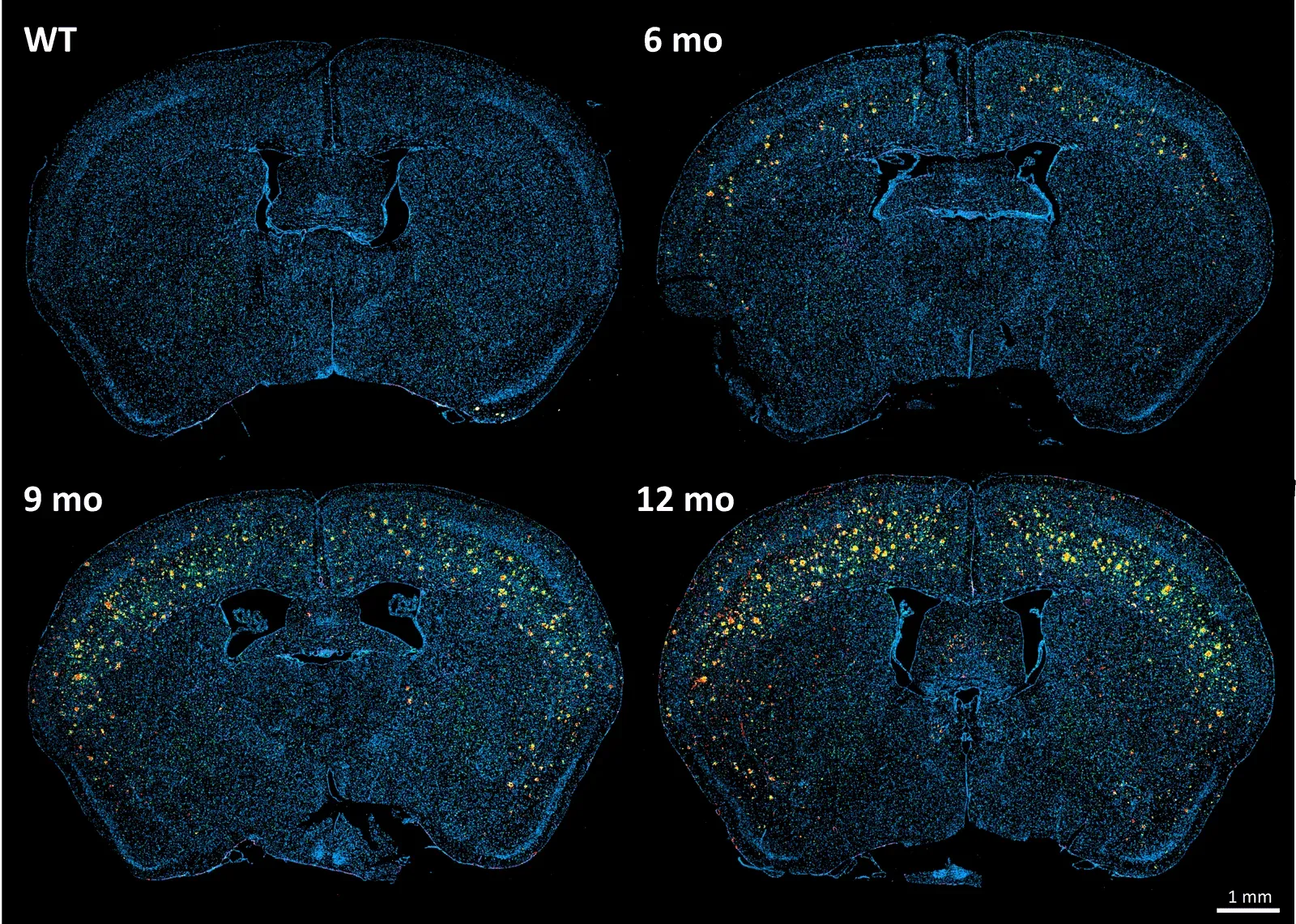
AD Brains with 4BB, 6M, 9M, 12M and WT

Spatiotemporal progression of amyloid-β and associated glial pathology in an APP/PS1 mouse model of Alzheimer's disease.

Interactive Presentation of our Research Study

In the "Image Interactive" below, you can find results from our amyloid-beta plaque and inflammatory microenvironment analysis, including high-resolution Multiplex Immunofluorescence tissue sections of brains from the APP/PS1 mouse model and control mice.

How to use Our Interactive Viewer
Navigate through the “Image Story” via the left-hand panel or the on-screen arrows. You can pan around high-resolution microscopy images with your mouse, and zoom in/out using the scroll wheel or the +/- controls. The Control Panel (top-right) allows toggling of image channels and segmentation overlays. For the best experience, we recommend switching to full-screen mode. This Interactive Presentation enables you to explore the model’s neuropathology and associated functional deficits in detail, as if looking directly down the microscope.


Quantitative Amyloid Plaque Microenvironment Analysis in the APP/PS1 Mouse Model

1/13

Biospective logo

Authors: Lionel Breuillaud, Laurent Potvin-Trottier, Ashmala Naz, and Barry J. Bedell

Alzheimer’s disease is a progressive neurodegenerative disorder marked by the accumulation of misfolded amyloid-β (Aβ) aggregates and the formation of extracellular amyloid plaques. APP/PS1 transgenic mice are a well-established double-transgenic model that robustly develops early-onset amyloid pathology in adulthood. The APP/PS1 (ARTE10) mouse model co-expresses human APP (Swedish mutations) and PS1 (M146V mutation) under the Thy1 promoter.

In this study, 5 μm brain sections from 6, 9, and 12 month-old ARTE10 mice and a 6 month-old WT controls (n=11, 13, 10, and 10, respectively) were processed with a multiplex immunofluorescence protocol for amyloid (OC), microglia (Iba-1), astrocytes (GFAP), and nuclei (DAPI). This approach enables simultaneous visualization and quantification of plaques, microglial and astrocytic morphology, and microenvironmental remodeling, offering an integrative view uniquely suited for preclinical drug evaluation. In this Interactive Presentation, we highlight key metrics quantified in this study:

  • Amyloid plaque density

  • Iba-1 and GFAP stain density

  • Activated microglia density

  • Astrocyte hypertrophy score

  • Density of glial cells as a function of distance from the plaque and plaque size

  • Ratio of microglia-to-astrocytes in the plaque proximity

Microglia and astrocytes are known to play a key role in neurogenerative disorders (Hulshof, 2022; Gao, 2023). Under stress conditions, these glial cells show drastic changes in their morphology (Savage, 2019; Patani, 2023). In addition, these cells play a key role in the remodeling of the plaque microenvironment (Mallach, 2024). Therefore, precise characterization of glial cells and their interaction with the plaque microenvironment could provide critical insight in a preclinical therapeutic efficacy study.

To navigate though this Image Story, you can use the arrows and/or the Table of Contents icon in the upper right corner of this panel.

Image explaining the functions of the different buttons of the navigator

You can also interact with the microscopy image in the Image Viewer on the right at any time to further explore this high-resolution data.

Amyloid Plaques are Present in 6 Month-Old APP/PS1 Mice

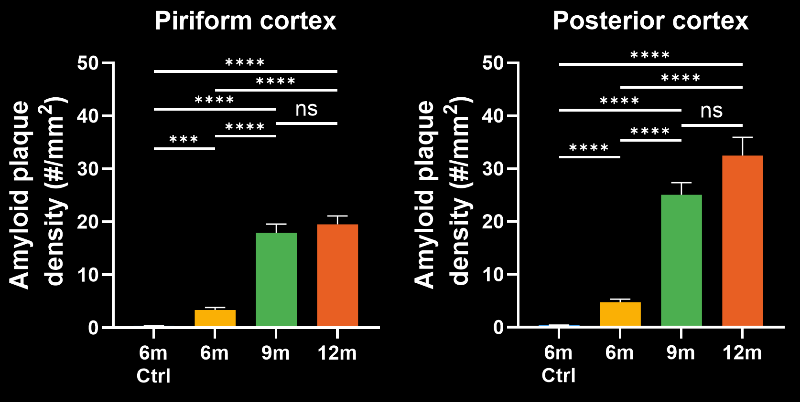
At 6 months-of-age, initial amyloid plaque deposition becomes detectable, with plaques emerging in specific brain regions, such as the cerebral cortex. At this stage, plaque burden remains relatively low and regionally restricted, representing an early phase of amyloid-β pathology prior to widespread cortical and subcortical involvement.

Comparison of Amyloid Plaque density in Control (6 month) and ARTE 10 (6, 9, and 12 month) old mice

Amyloid plaque density in the piriform cortex and posterior cortex of wild-type (6 months-old; control) and ARTE10 mice at 6, 9, and 12 months-of-age. Data are presented as mean ± SEM. Statistical analyses were performed using Brown–Forsythe and Welch ANOVA, followed by Dunnett’s T3 multiple-comparisons test. * : p<0.05, ** : p<0.01, *** : p<0.001, **** : p<0.0001​.

Dramatic Increase in Amyloid Burden at 9 Months-of-Age

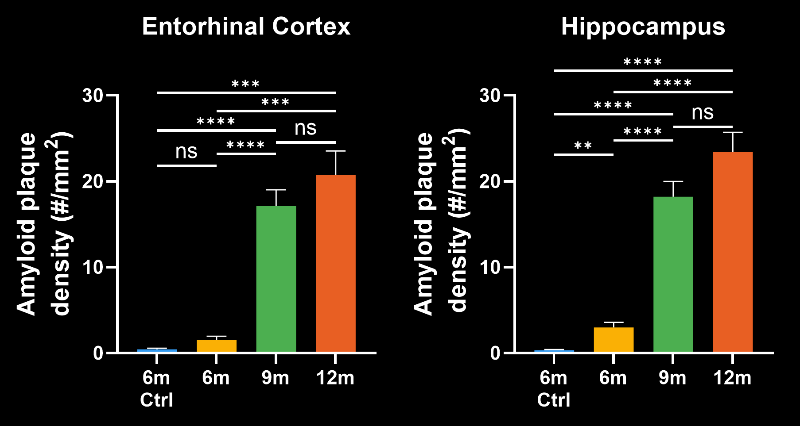
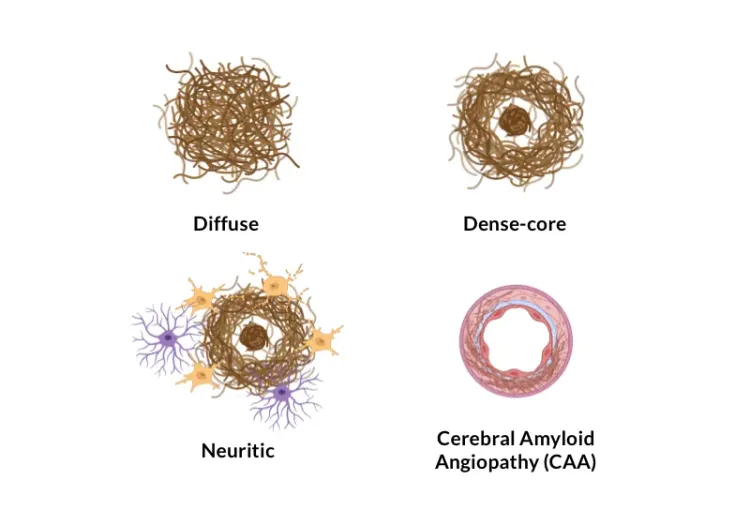
Between 6 and 9 months-of-age, there is a pronounced increase in both the number and size of amyloid plaques. Amyloidosis becomes prominent across multiple brain regions, including areas that previously exhibited minimal pathology, such as the entorhinal cortex and hippocampus. Plaques display greater morphological heterogeneity, with both dense-core and diffuse types emerging, reflecting the progressive maturation of amyloid-β pathology. This stage marks a transition from early, regionally-restricted deposition to widespread cortical and subcortical involvement, accompanied by increased microglial and astrocytic responses in the surrounding tissue.

Comparison of Amyloid plaque density in entorhinal cortex and hippocampus region control (WT; 6 month) and ARTE 10 (6,9,12 month) old mice

Amyloid plaque density in the entorhinal cortex and hippocampus of wild-type (6 months; control) and ARTE10 mice at 6, 9, and 12 months-of-age. Data are presented as mean ± SEM. Statistical analyses were performed using Brown–Forsythe and Welch ANOVA, followed by Dunnett’s T3 multiple-comparisons test. * : p<0.05, ** : p<0.01, *** : p<0.001, **** : p<0.0001​.

Continued Progression at 12 Months-of-Age

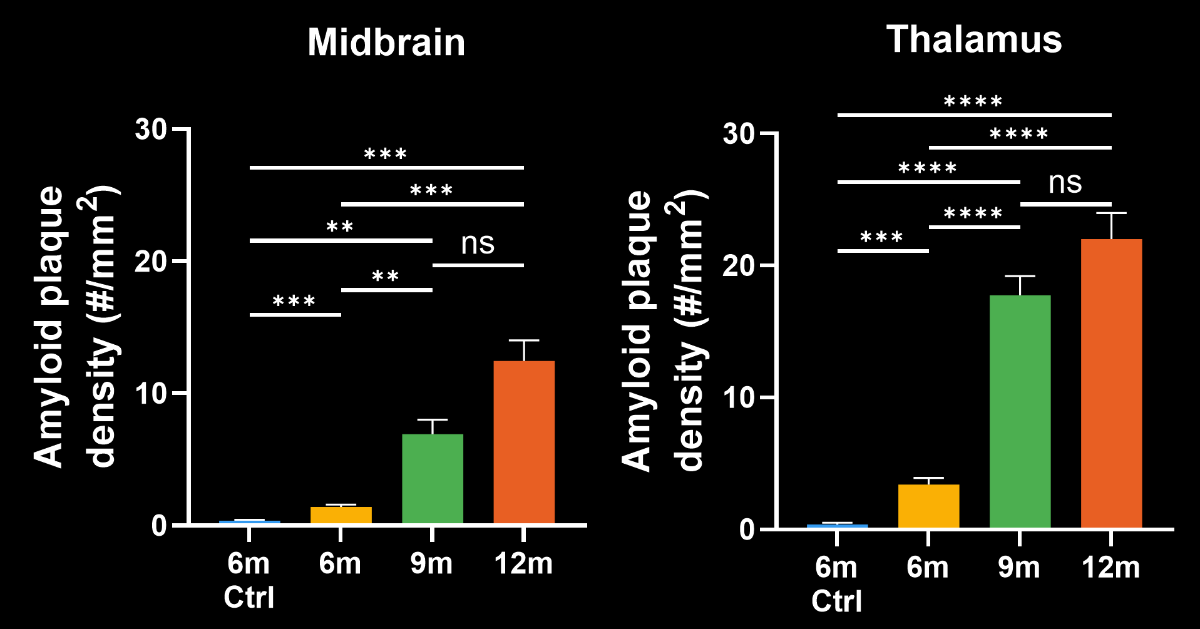
From 9 to 12 months-of-age, amyloid accumulation continues, though the rate of increase is less pronounced than in earlier stages. Brain regions that were relatively spared at younger ages, such as the midbrain, now exhibit higher plaque densities. In the regions analyzed, plaque density showed an upward trend; however, the increases did not reach statistical significance, suggesting that amyloid deposition is approaching a plateau in these areas. This stage reflects the maturation and stabilization of amyloid-β pathology, with ongoing local microglial and astrocytic responses in the vicinity of existing plaques.

Comparison of amyloid plaque density in the midbrain and thalamic regions of control (WT; 6 months) and ARTE10 mice at 6, 9, and 12 months of age.

Amyloid plaque density in the midbrain and thalamus of wild-type (6 months-old; control) and ARTE10 mice at 6, 9, and 12 months-of-age. Data are presented as mean ± SEM. Statistical analyses were performed using Brown–Forsythe and Welch ANOVA, followed by Dunnett’s T3 multiple-comparisons test. * : p<0.05, ** : p<0.01, *** : p<0.001, **** : p<0.0001​.

Absence of Plaques in Control WT Mice

In contrast, in wild-type (WT) animals, no amyloid plaque deposition is detected, and neuroinflammatory markers remain at baseline levels. Microglia show predominantly ramified morphologies and astrocytes show minimal reactivity, establishing a baseline reference for pathology-driven changes observed in the transgenic mice.

Progressive Microgliosis

The image depicts Iba-1–labeled microglia in a 9-month-old mouse. In this model, microgliosis closely follows the spatiotemporal progression of OC-positive amyloid pathology and can be quantitatively assessed through measurements of Iba-1 staining density.

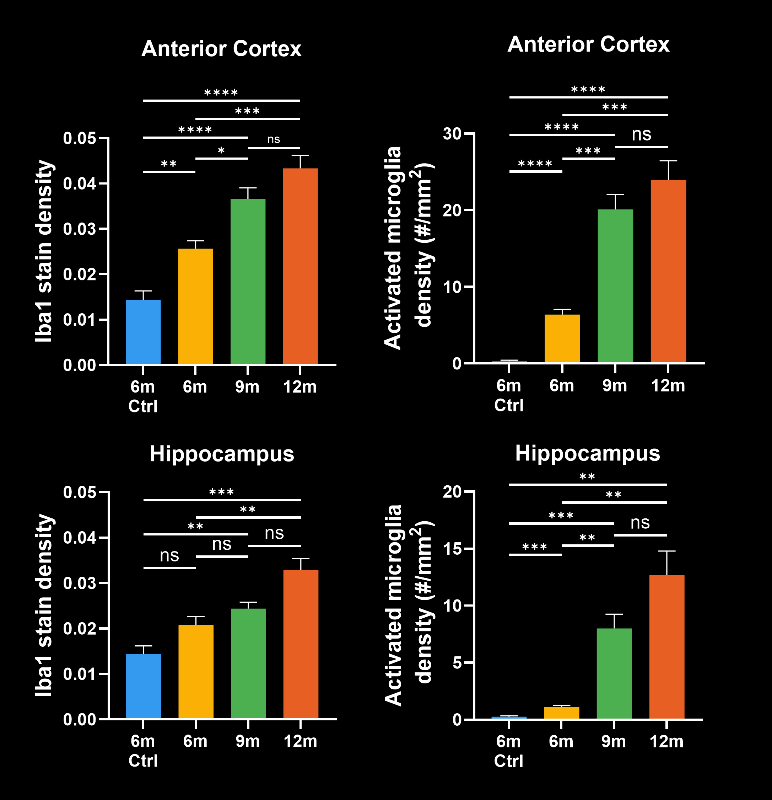
Iba-1 Staining and Activated Microglia Density in the Anterior Cortex and Hippocampus of  control (WT;6 month) and ARTE10 (6, 9, and 12 month) old Mice

Iba-1 stain density and activated microglia density in the anterior cortex and hippocampus of wild-type (6 month-old; control) and ARTE10 mice at 6, 9, and 12 months-of-age. Data are presented as mean ± SEM. Statistical analyses were performed using Brown–Forsythe and Welch ANOVA, followed by Dunnett’s T3 multiple-comparisons test. * : p<0.05, ** : p<0.01, *** : p<0.001, **** : p<0.0001​.

To derive a more sensitive metric of disease state, we applied our microglial morphology analysis pipeline to quantify the density of activated microglia. Detected microglial contours are color-coded based on morphological classification, with ramified microglia shown in green and activated microglia in purple. Only microglia with nuclei fully in-plane were included in the the detection step and analysis.

Quantification of activated microglial density revealed a similar pattern of progressive microgliosis, but with substantially greater statistical sensitivity than measurements based solely on Iba-1 staining density. Notably, the 6- to 9-month comparison reached statistical significance in the hippocampus and showed increased significance in the anterior cortex. In a preclinical therapeutic efficacy setting, this increased sensitivity could enable detection of smaller treatment effects without increasing cohort size.

To learn more about our microglia morphology analysis pipeline, please see our Innovation Presentation on microglia morphology.

Progressive Astrogliosis

Similarly, we quantified the astrogliosis by measuring the stain density of GFAP, as shown on this slide of from 9 month-old mouse. Astrogliosis also followed the temporal trend of the amyloid plaque density.

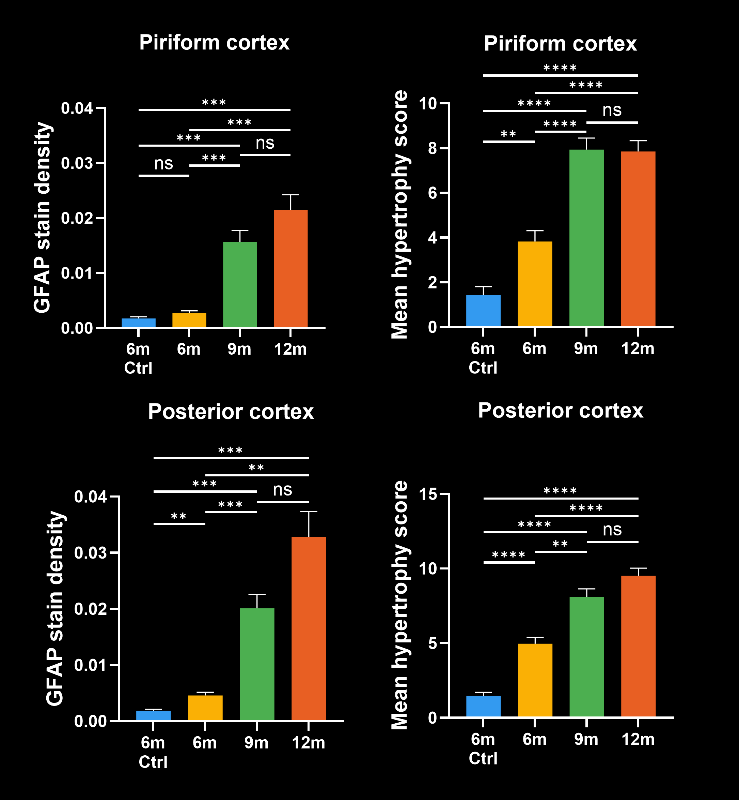
GFAP Staining Density and Astrocyte Hypertrophy in the Piriform and Posterior Cortex of Wild-Type and ARTE10 Mice

GFAP stain density and mean hypertrophy score in the piriform cortex and posterior cortex of wild-type (6 month-old; control) and ARTE10 mice at 6, 9, and 12 months-of-age. Data are presented as mean ± SEM. Statistical analyses were performed using Brown–Forsythe and Welch ANOVA, followed by Dunnett’s T3 multiple-comparisons test. * : p<0.05, ** : p<0.01, *** : p<0.001, **** : p<0.0001​.

We applied our pipeline for astrocyte detection and morphology analysis, this time measuring the mean hypertrophy score of astrocytes in each ROI. The contour of in-plane astrocytes is shown colored by their morphology: green for normal astrocytes and orange for reactive astrocytes.

Similar to the microglia analysis, the mean hypertrophy score showed a similar increase with age, but with higher statistical significance than GFAP stain density alone. For example, the early changes in the piriform cortex at 6 months-of-age became significant as compared to control.

For more information about our astrocyte morphology analysis, please see our Innovation Presentation on astrocyte morphology.

Microglia Accumulate Directly on Plaques, while Astrocytes are Most Distant

We next characterized the plaque-associated microenvironment by quantifying glial cell density as a function of distance from individual amyloid plaques. Spatial profiling was performed in 10 µm concentric increments extending outward from the plaque boundary. For clarity of visualization, only the outer boundary of the 20 µm periplaque microenvironment is displayed.

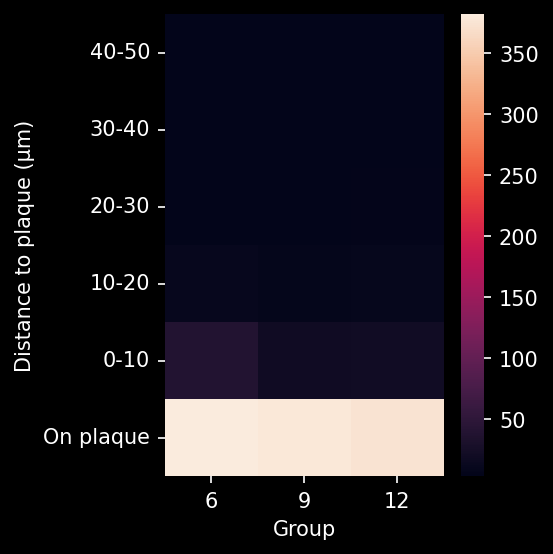
This analysis revealed a pronounced enrichment of activated microglia in direct contact with amyloid plaques. The accompanying heatmap illustrates activated microglial density as a function of distance from the plaque across experimental groups, with the color scale ranging from black (low density) to beige (high density). Activated microglia density was very high in direct plaque contact and low elsewhere, highlighting the highly localized nature of plaque-associated microglia.

Heatmap showing that the density of activated microglia is highly enriched directly on the plaque in the different age groups

Density of activated microglia as a function of distance to the plaque in APP/PS1 mice at 6, 9, and 12 months-of-age. The microglia are highly enriched in direct contact with the plaques.

Microglia Accumulate Directly on Plaques, while Astrocytes are Most Distant (continued)

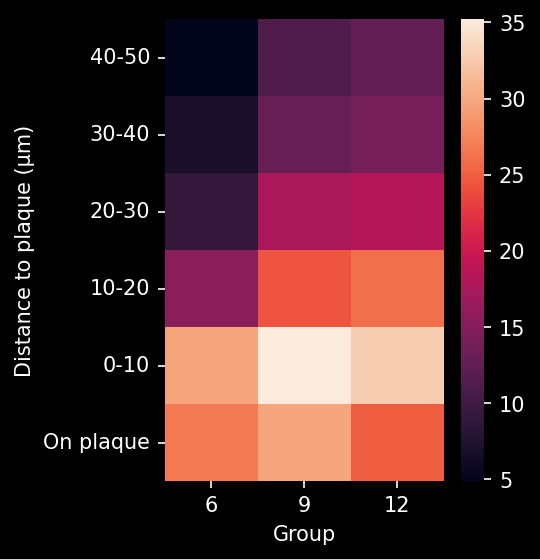
In contrast, reactive astrocytes exhibited a more distal spatial distribution relative to amyloid plaques. Astrocytic density peaked within the 0–10 µm periplaque zone and remained elevated up to approximately 50 µm from the plaque boundary, indicating a broader response compared to activated microglia. Spatial distribution patterns were consistent across age groups; therefore, subsequent analyses were focused on the 9-month-old cohort as a representative stage of established pathology.

Heatmap showing the density of reactive astrocytes as a function of the distance to the plaque in the different age groups, showing that the astrocytes accumulate close to the plaques but are more distant than microglia

Density of reactive astrocytes as a function of the distance to the plaque in APP/PS1 mice at 6, 9, and 12 months-of-age.

Plaque Size as a Proxy for Plaque Age to Study Microenvironment Spatiotemporal Dynamics

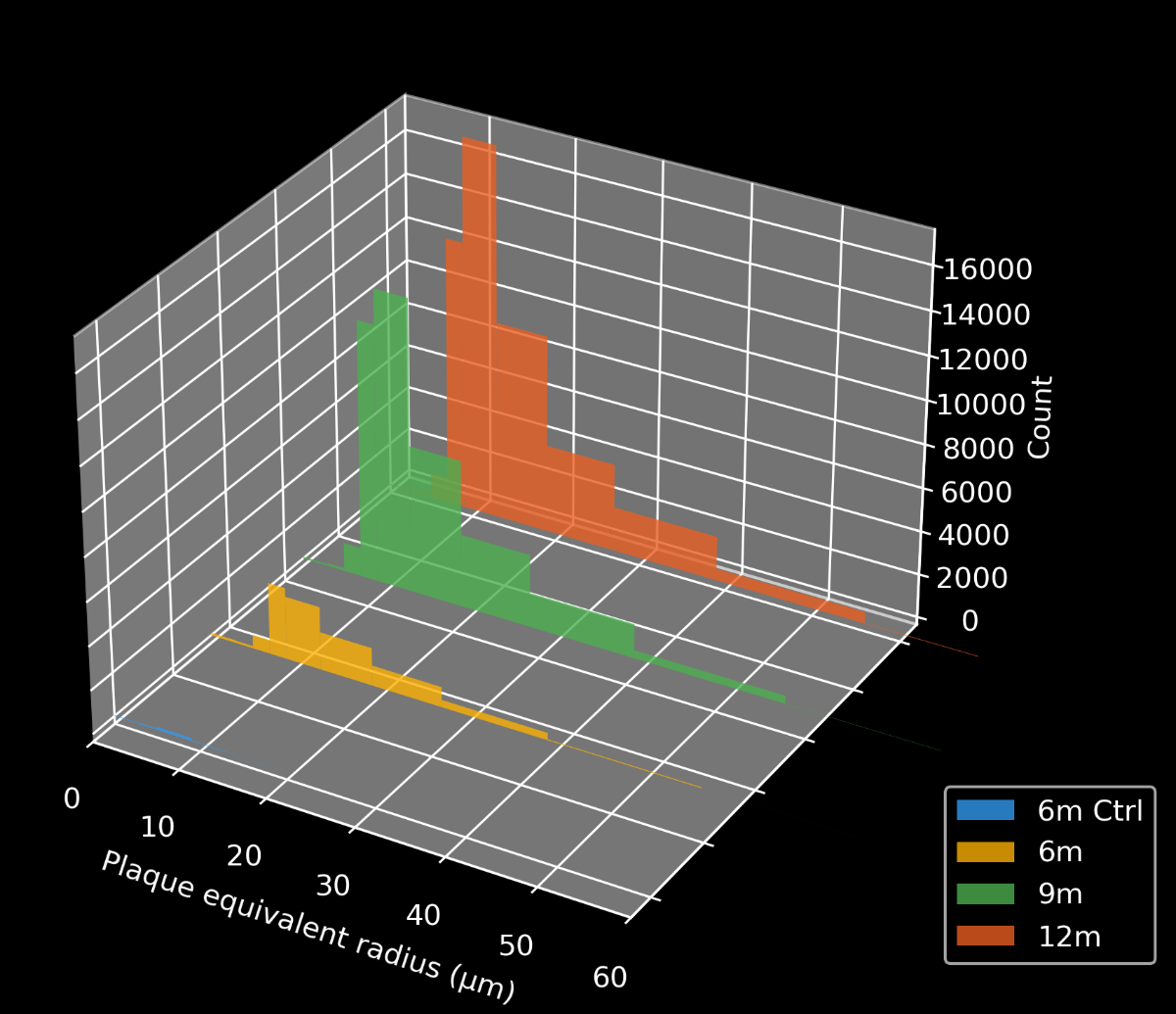
To obtain a better understanding of the microenvironment spatiotemporal dynamics, we measured the plaque size and used it as a proxy for plaque age. The image shows plaques colored by size for visualization in a 12 month-old mouse: small plaques with an equivalent radius of less than 10 μm, medium-sized plaques with an equivalent radius between 10 μm and 20 μm, and large plaques with an equivalent radius of more than 20 μm. The equivalent radius of a plaque is defined as the radius of a plaque of the same area but perfectly circular. The histogram below shows the full distribution of plaque size across the different age groups.

Histogram of plaque size in the different age groups, showing a progressive increase in the number of plaques with age

Histogram of plaque size, in plaque equivalent radius, in the different age groups, showing an overall increase in the number of plaques over time.

Plaque Size as a Proxy for Plaque Age to Study Microenvironment Spatiotemporal Dynamics (continued)

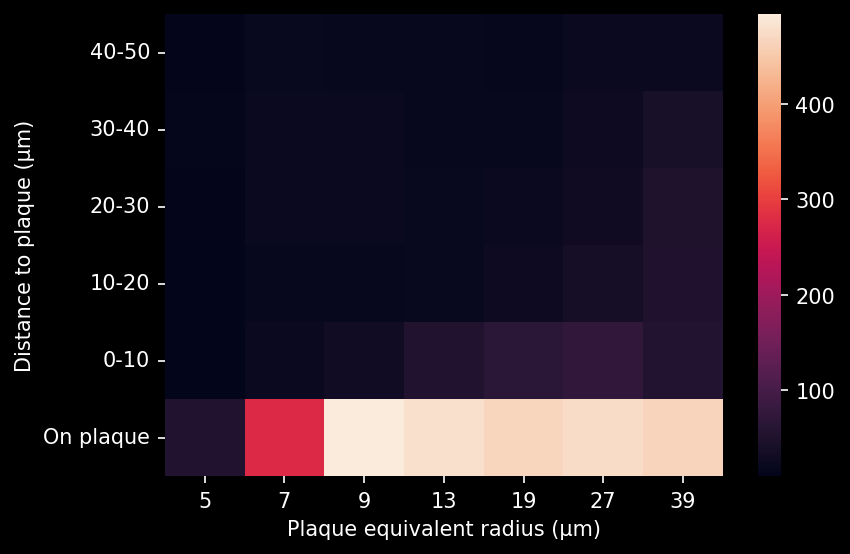
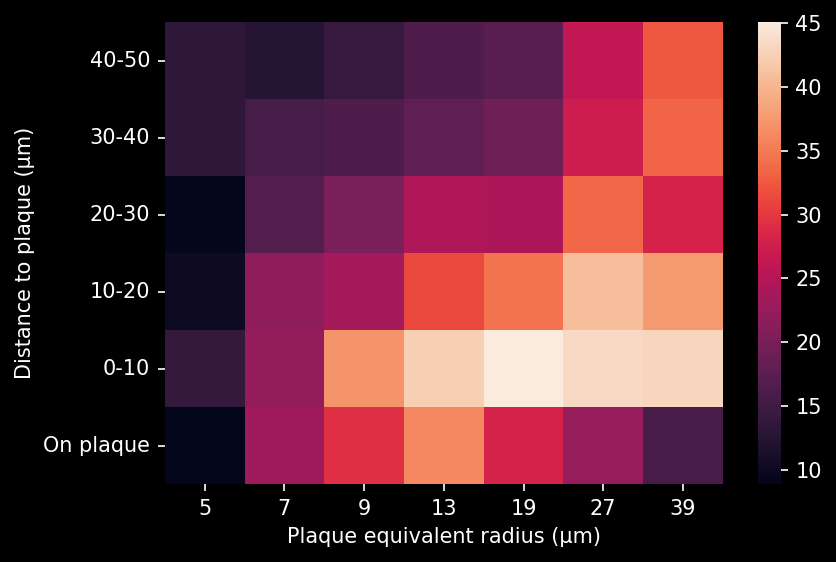
We then quantified the glial cell density as a function of distance from the plaque and plaque size.

The heatmap below now shows the activated microglia density as a function of distance to the plaque and plaque size, or plaque equivalent radius. We can see that, once again, the microglia are highly enriched in direct contact with the plaques. The density rapidly increases in small plaques and plateau in medium-sized plaques.

Heatmap of activated microglia density as a function of the distance to the plaques and plaque size, showing that microglia can be found in small plaques and that the density plateaus in large plaques

Heatmap of the density of activated microglia as a function of the distance to the plaque (y-axis) and plaque size (x-axis, plaque equivalent radius) in 9 month-old APP/PS1 mice.

Now looking at the astrocytes, we see a very different dynamic. First, the reactive astrocytes are detected in slightly larger plaques than microglia. In addition, their numbers in contact with the plaque increase in the medium-sized plaques, but then decreased in the largest plaques.

Heatmap of reactive astrocytes density as a function of the distance to the plaques and plaque size, showing that microglia can be found in small plaques and that the density plateaus in large plaques

Heatmap of the density of reactive astrocytes as a function of the distance to the plaque (y-axis) and plaque size (x-axis, plaque equivalent radius) in 9 month-old APP/PS1 mice.

Microglia-to-Astrocyte Ratio as a Sensitive Metric of the Later Disease Stage

Because astrocytes and microglia have different behaviors in larger plaques, which are predominantly found in older groups, we hypothesized that a metric based on this phenomenon could help differentiate the 9 and 12 month-old groups.

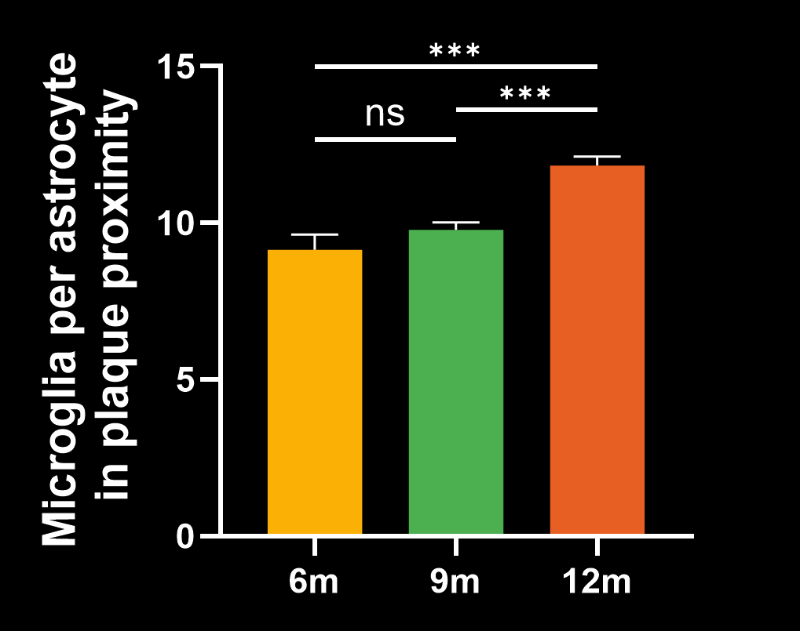
We measured the ratio of microglia-to-astrocyte in the plaque proximity, and found that this ratio was higher in the 12 month-old group as compared to the other disease groups. In our study, this metric was the only one that showed a statistically significant difference between the 9 and 12 month-old groups.

While the other metrics, such as the amyloid-β and GFAP stain density, generally trended higher in the 12 month-old group, none showed a statistically significant change between the two older groups.

Microglia-to-Astrocyte ratio in the vicinity of Amyloid plaques in ARTE10 mice across age

Ratio of microglia per astrocytes in the proximity of plaque (<10 μm from the plaque edge) in APP/PS1 mice at 6, 9, and 12 months-of-age. Data are presented as mean ± SEM. Statistical analyses were performed using Brown–Forsythe and Welch ANOVA, followed by Dunnett’s T3 multiple-comparisons test. * : p<0.05, ** : p<0.01, *** : p<0.001, **** : p<0.0001​.

This approach illustrates how quantifying astrocyte-microglia interactions can provide an informative metric of disease progression.

Summary

In conclusion, we have shown how our fully automated platform can quantify glial cell phenotypes and their spatial relationship to the plaque environment. Using this approach in the APP/PS1 mouse model of AD, we quantified different metrics, such as the activated microglia density, the astrocytes hypertrophy score, and the microglia-to-astrocyte ratio in the proximity of the plaque.

These complementary metrics demonstrated higher sensitivity than simple stain density measurements, revealing subtle spatial and morphological features of microglia and astrocytes that could be missed using standard approaches.

In a preclinical therapeutic efficacy study, this enhanced sensitivity would allow detection of smaller treatment effects without increasing cohort size. In addition, this comprehensive suite of metrics could be particularly insightful for evaluating therapeutics targeting microglial plaque engagement, microglia-astrocyte interactions, particular glial cell phenotypes, or other related mechanisms.

Please feel free to further explore the microscopy images in the viewer.

We would be happy to discuss this amyloid mouse model, its characterization, and our amyloid plaque microenvironment and neuroinflammation analyses if you would like to Contact Us.

Biospective logo

Table of Contents
Control Panel
Section: ARTE10 - 12 months
Segmentations
Channels

Image Interactive describing our amyloid plaque and neuroinflammatory microenvironment analysis, including high-resolution Multiplex Immunofluorescence brain tissue sections, from the APP/PS1 (ARTE10) mouse model and control mice.

Key Advantages of Biospective's Amyloid Plaque Staining & Analysis Services:

  • High-sensitivity OC fibrillar amyloid detection
  • Optional pan-Aβ, Aβ40, Aβ42, Aβ43 isoform analysis
  • Custom antibody/marker staining
  • High-throughput, automated whole slide imaging and neuroanatomical region analysis
  • Amyloid plaque characterization and quantification
  • Glial cell morphology and phenotype analysis
  • Advanced neuroinflammation and plaque environment metrics — highly sensitive to small changes in disease progression
  • Cross-species (mouse, rat) compatibility
  • Complementary services (e.g. fluid biomarkers measured via immunoassays) 

Selection of Amyloid Plaque Environment Metrics provided by Biospective's Platform

Metric

Units

Description

Amyloid plaque density 

Counts per mm² 

Density of amyloid plaques in each anatomical ROI 

Stain density 

Fraction 

Fraction of pixels positive for each stain used in multiplex IF or IHC 

Density of activated microglia 

Counts per mm² 

Density of microglia classified to a non-ramified morphology 

Mean hypertrophy score of astrocytes 

Morphology score 

The average morphology score of detected astrocytes in an ROI 

Density of glial cells in plaque microenvironment 

Counts per mm² 

Density of microglia or astrocytes in plaque microenvironment at different distances from the amyloid plaques (e.g. up to 0 µm, 10 µm, 20 µm, 30 µm, etc. away from the plaque) 

Microglia-to-astrocytes ratio in plaque proximity 

Unitless 

Ratio between microglia and astrocytes in close proximity to the plaque microenvironment (e.g. up to 10 µm around the plaques). 

Plaque morphometrics 

Multiple 

Different morphology metrics can be extracted from the plaque detection, such as plaque size, circularity, etc. 

This table compares the various amyloid plaque environment metrics provided by Biospective's platform.

To discuss your study requirements or request a quote for Amyloid Plaques Staining and Quantitative Analysis services:

FAQs

Why do you work with fibrillar-specific antibodies such as OC, and how does it compare to classical Aβ antibodies?

OC is our primary antibody for detecting fibrillar amyloid and fibrillar oligomers, chosen for its specificity toward β-sheet–rich aggregates. It detects both young and mature plaques, reliably identifying compact cored plaques as well as diffuse fibrillar structures, and, importantly, does not detect intracellular APP. 

We also provide a pan-Aβ antibody that specifically detects extracellular amyloid, and like OC, it has minimal cross-reactivity to intracellular Aβ or full-length APP, thereby allowing accurate quantification of extracellular plaques on their own.

In addition to OC and pan- Aβ, we support multiplexed quantification of Aβ1-40, Aβ1-42, Aβ1-43MOAB-2 as well as the classical 6E10 and 4G8 antibody clones allowing for detailed biochemical and spatial profiling of plaque heterogeneity. This combined approach provides a granular view of plaque naturediffuse versus dense-coresize, maturation, distribution, and remodeling as a result of therapeutic intervention.


Can you co-stain with amyloid dyes or protein aggregation markers?

Yes. Amyloid dyes such as Thioflavin S and pFTAA can be incorporated into multiplex panels, provided that the tissue and fixation conditions are compatible. Thioflavin S is a classic β-sheet amyloid marker and pFTAA is highly sensitive dye resolving fibrillar conformationsThese dyes complement OC or Aβ antibodies to provide a multi-layered assessment of plaque protein architecture. 


Which tissue formats do you support (FFPE, frozen)? 

We routinely process both FFPE and fixed-frozen tissue. Antigen retrieval conditionsincluding HIER, formic acid, or enzymatic digestionare optimized for each amyloid antibody (e.g. OC, pan-AβAβ1-40/42/43) and for multiplex compatibility. Our workflows preserve fine plaque morphology and surrounding microstructures without compromising fluorophore stability. 


How many markers can you run simultaneously?

Our standard multiplex panels support 4 markers plus DAPI in a single staining round, typically using AF488, AF555, AF647, and AF750. We mix primary antibodies from multiple host species and validate species-specific secondary antibodies to prevent cross-reactivity. When helpful, we incorporate pre-conjugated primaries to expand multiplex capacity while maintaining high signal-to-noise ratios. 


Do you use fluorescence quenchers to reduce autofluorescence?


Do you support whole-slide scanning and large-scale cohorts?


Can you integrate CSF or blood biomarker data with histological readouts?


References


Keywords


Related Content

Up-to-date information on Amyloid Plaque Staining and Quantitative Analysis services.
More Information

Let us know what you’re interested in. Our team will be happy to discuss with you!

Email us at i[email protected] or simply complete & submit the form below. 

Name*
Email*
Purpose of Inquiry*
Affiliation (Company/Institution)*
Message*

Your privacy is important to us. We will protect your data as outlined in our Privacy Notice.

I agree to the terms in the Privacy Notice*

We use necessary cookies to make our site work. We also use other cookies to help us make improvements by measuring how you use the site or for marketing purposes. You have the choice to accept or reject them all. For more detailed information about the cookies we use, see our Privacy Notice.